



01/
What Is FinOps — and Why Does Your Cloud Bill Depend on It?
Most companies don’t have a cloud spending problem — they have a visibility problem. Without a structured FinOps process, engineering teams provision resources, finance teams receive invoices, and no one in between can clearly answer: what are we actually paying for, and is it worth it?
FinOps — short for cloud financial operations (cloud financial management) — is the practice of bringing financial accountability into cloud operations. It’s not a one-time audit or a cost-cutting exercise. It’s a continuous framework where finance, engineering, and business teams share responsibility for cloud spend and make decisions based on real-time data.
At NIX, we’ve seen companies run idle EC2 instances for months, pay for unused reserved capacity, or keep development environments running 24/7 simply because no automated shutdowns were configured. These aren’t edge cases — they’re common in fast-growing companies that didn’t implement cloud cost governance from the start.
02/
What Does a Free FinOps Audit Cover?
Our free FinOps audit (cloud cost audit) is the starting point for any FinOps engagement — and where most clients identify their first savings within days.
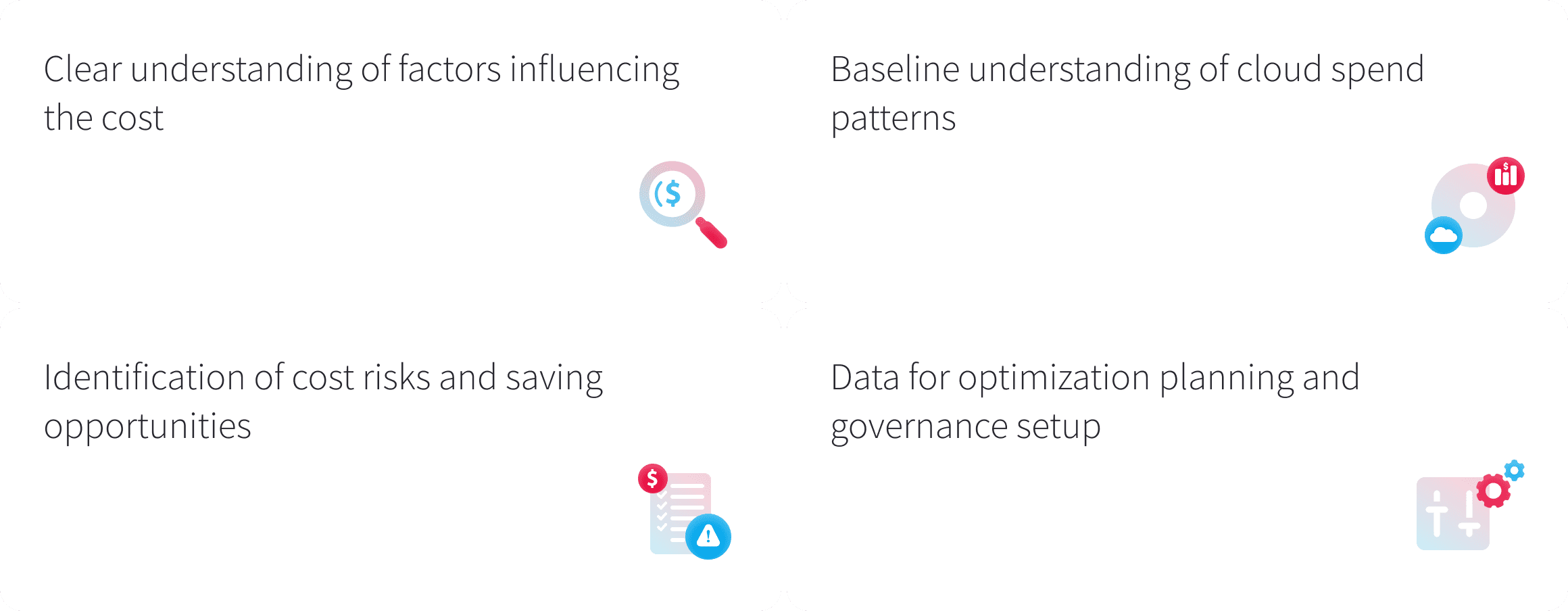
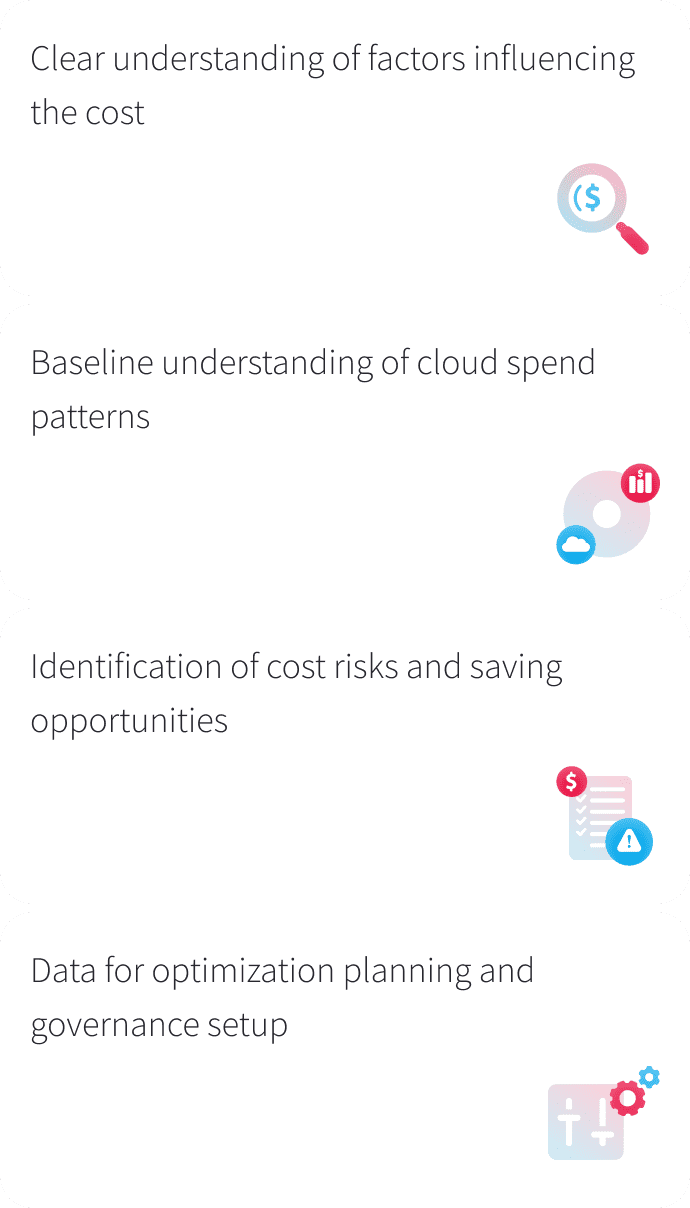
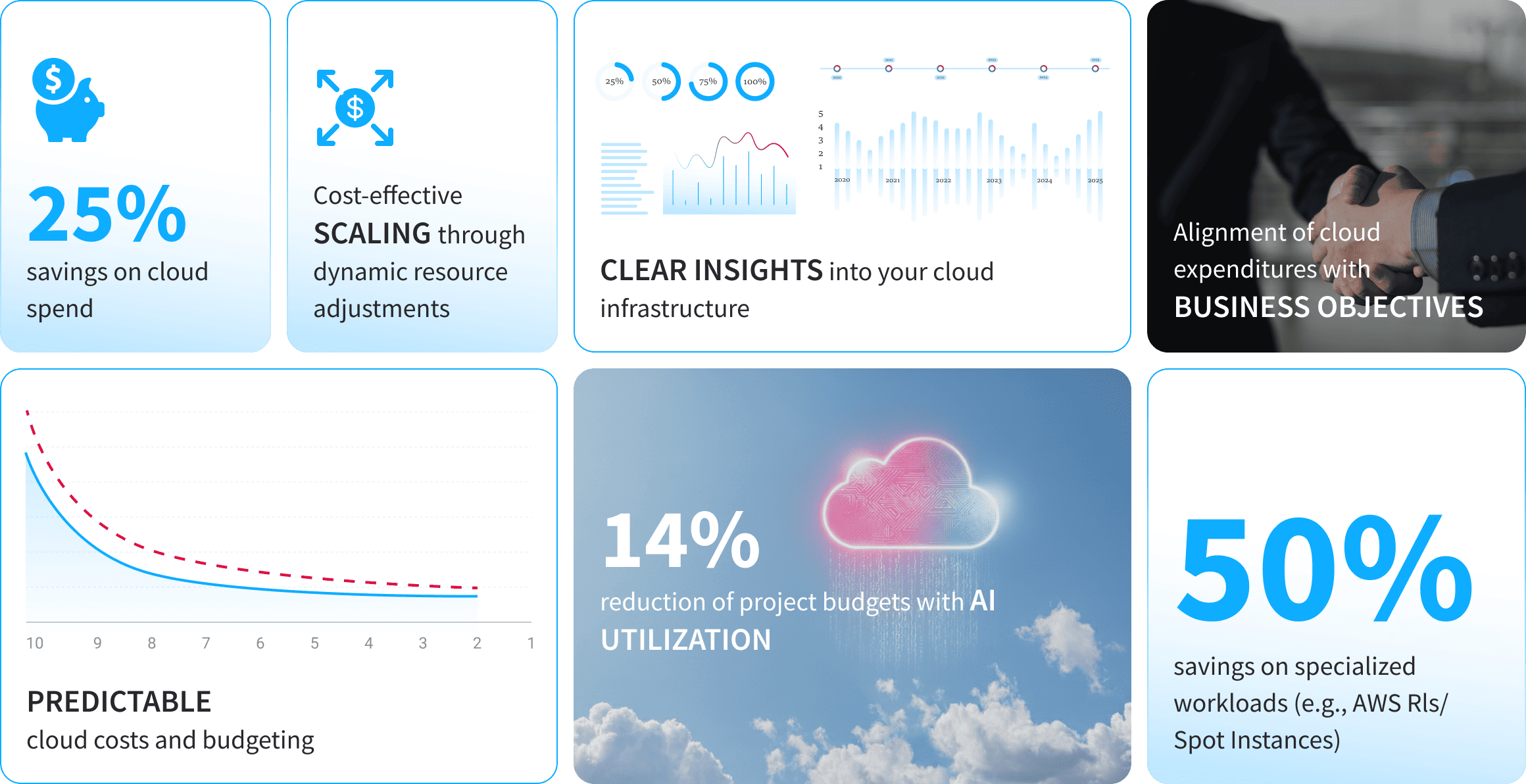
We begin with read-only access to your billing systems — AWS Cost Explorer, Azure Cost Management, or GCP Billing Reports. Our certified FinOps engineers then analyze your cloud costs: which teams drive spend, which services are underutilized, and where on-demand pricing could be replaced with Reserved Instances or Savings Plans to reduce costs by 30–50%.
Within 5 business days, you receive a prioritized cloud cost optimization roadmap — tailored to your infrastructure, cloud providers, and business model. The audit is free, requires no commitment, and comes with no sales pressure.
03/
How Does FinOps Differ Across AWS, Azure, and GCP?
FinOps implementation varies by platform, but the goal remains the same: cloud cost optimization and visibility.
- AWS FinOps focuses on Reserved Instance optimization, Spot Instance strategy, and compute rightsizing. As an AWS Advanced Partner, NIX has access to deeper pricing insights and tooling.
- Azure FinOps often uncovers savings in licensing overlap, underused Hybrid Benefits, and untagged resources that limit cost allocation.
- GCP FinOps focuses on committed use discounts and sustained use optimization — areas with high savings potential but complex configuration./li>
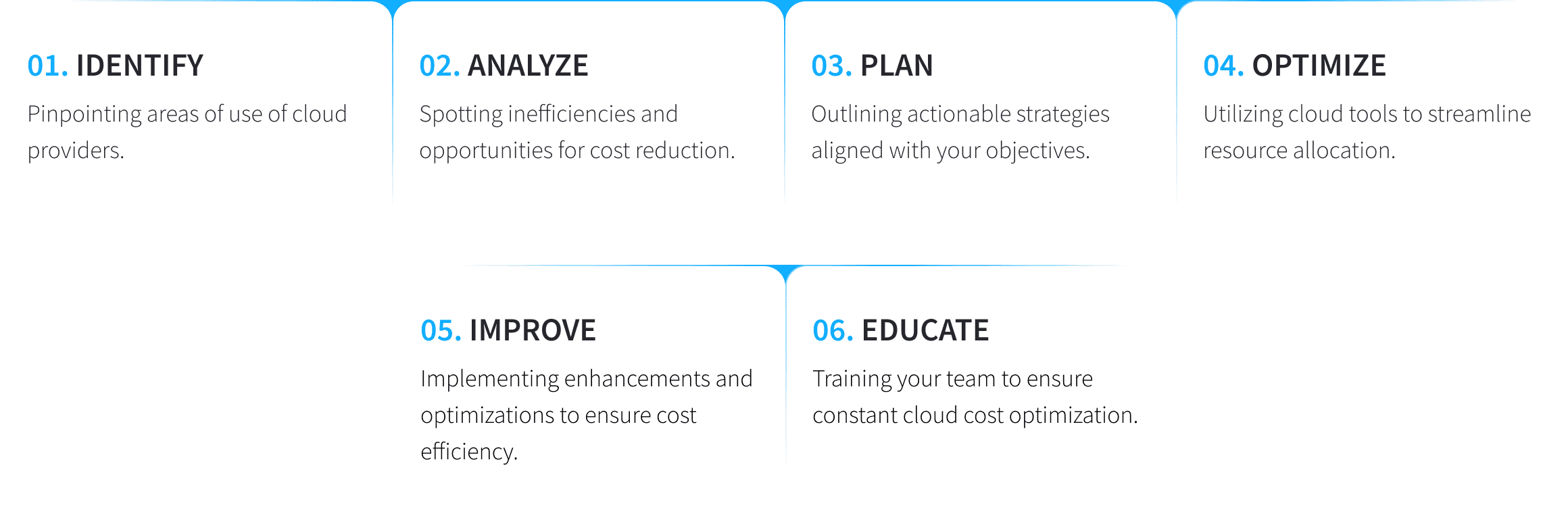
Across all platforms, the FinOps process follows the same core steps: analyze cloud spend, identify cost drivers, eliminate waste, and implement governance to prevent future inefficiencies.
04/
Who Typically Needs a FinOps Audit?
A FinOps audit is usually initiated when cloud costs grow faster than expected.
- A CFO sees cloud spending increase by 40% while revenue grows only 12%
- A CTO is tasked with reducing infrastructure costs before a board meeting
- An engineering leader lacks visibility into service-level cloud costs
Instead of hiring a full-time cloud architect, companies turn to FinOps consulting to get fast, expert insights.
Typical triggers for FinOps:
- rapid growth after cloud migration
- new AI or data-intensive features
- post-acquisition infrastructure consolidation
- stagnant development with unchanged cloud costs
If any of these apply, a free FinOps audit is the fastest, lowest-risk way to regain control over cloud spending.
05/
Why Isn’t FinOps a One-Time Fix?
A one-time cloud cost audit will identify savings — but without continuous FinOps practices, those savings disappear.
Cloud environments constantly change: new services are deployed, teams scale, pricing models evolve, and reserved capacity expires. Without ongoing monitoring and governance, inefficiencies return.
NIX approaches FinOps as a continuous lifecycle:
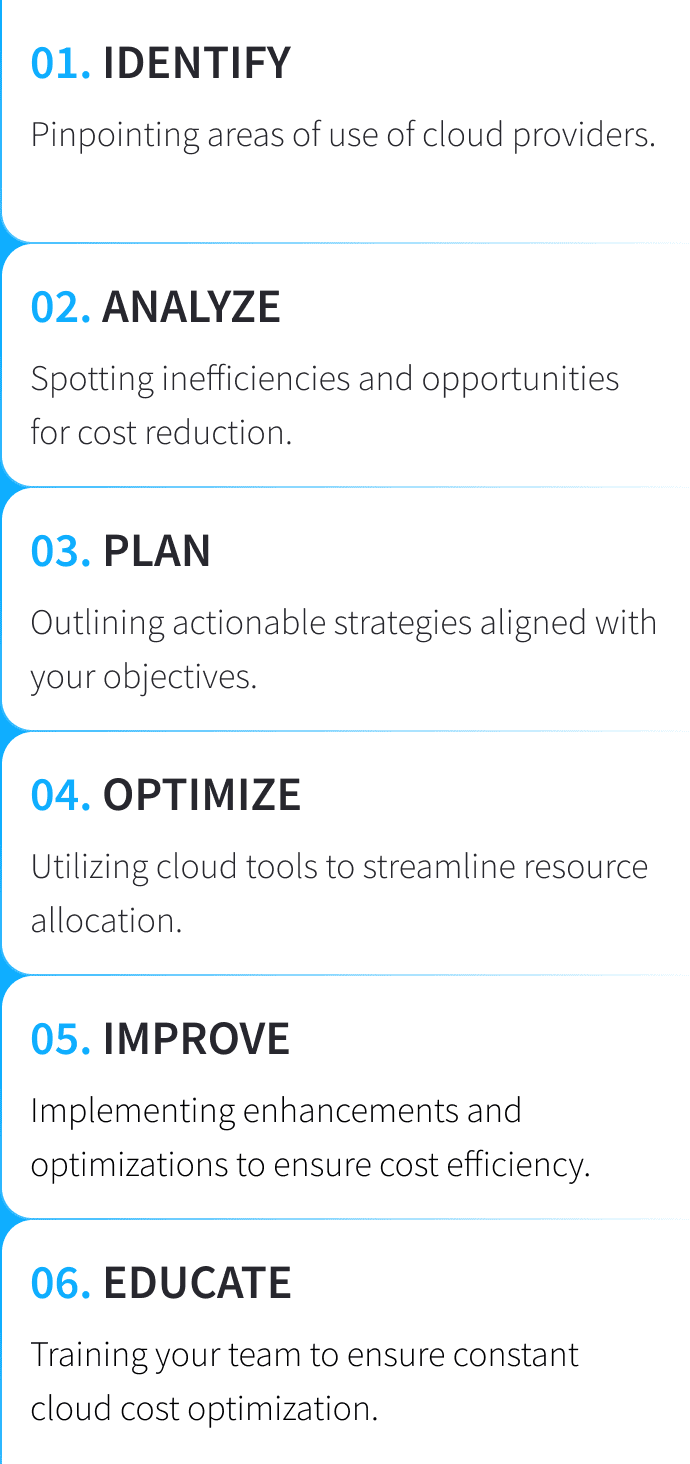
- Assess — audit and visibility (free FinOps audit)
- Optimize — implement cost-saving recommendations
- Operate — continuous monitoring, reporting, and optimization
The goal of FinOps is not just to reduce cloud costs once, but to make cloud spending predictable, controlled, and aligned with business outcomes.
06/
How Can You Get Started with a FinOps Audit?
Getting started with a FinOps audit is simple.
You provide read-only access to your cloud billing system, and within 5 business days, you receive a full cloud cost optimization report with identified savings opportunities.
There’s no long-term commitment required. You receive the FinOps audit results regardless of whether you continue working with NIX.
To book your free FinOps audit, fill out the form on this page. A senior FinOps engineer will contact you within one business day to confirm scope and access details.